|
***REMINDER: NTS2 Callout Meeting, February 4, 9PM ET*** |
|
The NTS 2.0 subcommittee and its working groups have completed a number of projects and initiatives.
Examples include the NTS Treasure Hunt, the Radiogram Portal, certificates, enhancing ARL numbered texts and handling instructions, and of course, creation of The NTS Letter. More projects are planned or are in the works.
We are looking for individuals who would like to be a part of this exciting initiative! We’re holding a callout meeting on Tuesday, February 4, 2025, at 9 PM ET/6 PM PT for anyone who is interested in learning more about the future of NTS and NTS 2.0. The URL is bit.ly/406jokl.
You are not required to download or install any additional software or apps.
Just type the URL into your browser.
Questions? Contact ARRL New England Division Vice Director Phil Temples, K9HI, at k9hi@arrl.org.
|

|
|
|
Last month’s issue of The NTS Letter included an article from Wisconsin Section Traffic Manager Denny Rybicke, K9LGU, titled “Who Are We?”. I would like to expand on that with a few thoughts on “Why Are We Here?” Many have said that NTS is outdated, that it had its heyday and now should be left to live out its remaining days in retirement until the last of the remaining traffic handlers are gone.
But what really is the value of NTS today? Do we have a product looking for a purpose and for users, or is there already a need for which we should be preparing?
When we see more extreme weather patterns as well as increasing cyberattacks, amateur radio operators can stand ready to assist and, as mandated by the FCC, make our service of value to the public.
And yet, today, we have seen messages taking days to deliver and all too often not being delivered at all.
The NTS 2 committee is dedicated to improving this situation.
While the public has faster, even instant, means of communication with internet email and cell phone service, it has been shown that these can and do fail.
When a disaster strikes, people have an even more desperate need to communicate.
Can we be ready to assist if called upon?
As the average age of traffic handlers today is increasing, we need to attract younger operators.
One way might be to make use of newer technologies.
Young people today have grown up with a host of technological advances, so incorporating more modern digital modes, multimedia, and more could attract these young people.
Also, while CW is thought to be “old school,” this mode could become invaluable in some situations.
Organizations such as CWops and LICW have found a lot of interest and have been quite active in teaching CW.
In fact, LICW offers weekly classes in eight-week sessions teaching about CW traffic nets.
We might consider their example.
Since the attraction of new licensees to traffic handling is not keeping up with the loss of those who have passed, we have an urgent need to come up with new ideas.
Those of us who support the traffic system do so because we enjoy it, whether it be the sense of pride in doing something well, the service of keeping others in touch, or the regular community with friends.
Can we make it enjoyable for the newer hams as well?
These are just a few thoughts, but I’m sure there are more.
As you may be aware, the ARRL Emergency Communications and Field Services Committee (EC-FSC) has authorized subcommittees to study and make recommendations for the modernization of both NTS and ARES.
But these subcommittees depend on volunteers to help inspire ideas and ways to fulfill this mission.
Please attend the call-out Tuesday, February 4, at 9:00 PM eastern time (6:00 PM Pacific time) and volunteer to help.
— KW1U
|
|
QMN, the Michigan Section CW traffic net, is celebrating its 90th anniversary in 2025. Founded in late 1935 by members of the Detroit Amateur Radio Association, QMN is the nation’s oldest spot frequency traffic net and is responsible for a number of innovations in public service communications.
It went on to be adopted by ARRL as a model for other traffic nets.
Prior to implementation of a net concept, radiogram traffic and emergency communications were conducted on a system of schedules and random contacts.
Radiogram traffic moved across the country on “trunk line” networks staffed daily by “iron man” traffic handlers. Traffic was routed to its destination via individual schedules, directional “CQ” requests, and similar techniques.
The non-systematic nature of these methods often resulted in delays in delivery.
The 1930s had seen a number of improvements in radio technology such as stable crystal-controlled transmitters and calibrated receivers.
In 1935, a committee of the Detroit Amateur Radio Association took advantage of these improvements to implement a single-frequency traffic net.
This new method permitted stations throughout a state or region to meet on a specific frequency at specific times each day to exchange traffic, resulting in more reliable traffic flow and consistent message originations and delivery.
At a QMN meeting in Detroit in 1939, a committee standardized the procedures and developed the well-known “QN-signals,” which were eventually adopted by ARRL for all CW traffic net use.
QN-signals are widely distributed in ARRL publications and continue to be used throughout North America.
QMN also pioneered in the field of disaster response, deploying emergency response teams in an era before the Amateur Radio Emergency Corps (predecessor to today’s ARES®) was a commonplace fixture.
A 90-year run (with the exception of WWII years when amateur radio operators were silenced by the wartime government) is quite an achievement.
Congratulations to QMN participants, past and present.
Net Manager Tom Hammond, W8MK, says the net doesn’t have any on-air activities planned but is recognizing the anniversary in the net preamble throughout 2025. The net meets daily on 3563 kHz at 6:30 PM and 10:00 PM local time (ET).
|
|
Clarification on Radiogram Portal Users and “Radiogrammers” |
|
We have seen applications to become “radiogrammers” from people who are just learning about NTS and message handling, and we would like to clarify the distinction between users and “radiogrammers.” Anyone is invited to use the Radiogram Portal to send messages.
You don’t have to know how to format a message as the software will do that for you.
Once you’ve submitted your message, you don’t need to know how to get it into the network.
You needn’t be an authorized “radiogrammer” to do so. A “radiogrammer’” is one who has had training and experience in both handling radiograms and participating in traffic nets or the digital traffic network and knows how to move those radiograms through the network.
You can receive that training by contacting your Section Manager or Section Traffic Manager and participating in your local nets.
Once you have some experience, you may apply to become a “radiogrammer.”
|
|
Dan Rinaman, AC8NP
Hello, Treasure Hunters!
At the time of this writing, the January Treasure Hunt is still ongoing and information regarding the winners of this hunt and answers to the questions will be announced in the March issue of The NTS Letter. As the hunt is conducted bi-monthly, there will be no hunt in February, but check the March issue for details about the next hunt.
What does THR1 mean? THR1 – THR4 means Treasure Hunt Round 1 through 4. During the January hunt, I received 6 messages with THRU 1. Since I did not know if the message started out with THRU 1 or if it got changed during relay, I chose to accept them. As message handlers, we need to copy and relay the messages as sent.
We did have a problem in which a couple of messages got lost in the RF. It seems that during a digital network connection, something disrupted the transmission and the receiving station did not get the messages, but the sending station recorded that the traffic passed. The people who know these systems are looking into what happened and how to prevent it from happening again.
Most of the time, the judges will respond with a radiogram back to you within 24 hours of the receipt of your message. Our judges are on traffic nets almost daily. The in-transit time will vary. So, if it has been a few days and you do not receive a reply radiogram, try sending a new one with a new message number.
Try to learn about the NTS in your section. Who is your Section Traffic Manager (STM)? The STM can answer your questions on how to move traffic in and out of your Section.
If you missed the official Treasure Hunt announcement in the December 2023 issue of The NTS Letter, here is a recap: This is a fun, on-air, multi-step competition in which you respond to a "judge" with your answer to an initial clue or question via radiogram. The judge will reply via radiogram with the identity of the next judge, along with the next question or clue in the hunt.
If you have any comments or suggestions, please use the survey form
or email Dan Rinaman, AC8NP, at ac8np@ac8np.com.
|
|
Notes on Message Delivery |
|
Delivery of message traffic is a key factor in the impression we convey of amateur radio as a service to the public. How amateur radio is perceived can be influenced by our prompt and courteous delivery of messages. Yet many may not be comfortable calling people we do not know and may even be shy about checking into traffic nets so they won’t be asked to deliver a message. Even the thought of delivering a message to another amateur radio operator such as a new licensee can raise feelings of anxiety. There are some amateurs, however, who are quite comfortable making such calls. John Marcus, W1JWM, has written a script for speaking with others or for leaving voicemails. This has recently been added to the nts2 website at nts2.arrl.org/radiogram-call-script-guide. John has developed sales teams for over a decade and has made thousands of calls in his day job to deliver messages to absolute strangers.
He also notes that he provides free coaching and “mock” or practice calls to amateurs looking for practice delivering traffic.
Keep in mind, too, that you never know whether that recipient will find the message of value, but imagine how you will feel when they do.
Of course, when people screen calls and don’t answer a number they don’t recognize, or when a number is incorrect or disconnected, traffic handlers have often resorted to email if an email address is included.
While not as personal as a phone call, there are some advantages and points to consider.
In an email, the recipient has a written copy of the message to read at any time.
When emailing a message, however, an explanation is important.
A recipient may wonder who you are and how you received this message, so introducing yourself as an amateur radio operator and giving a brief explanation about how messages are relayed via amateur radio would appropriately be included in the email.
Be sure to also include a way for them to respond to you with any questions or perhaps a reply to the originator.
I’m sure many have heard the question, why would we deliver by email when the originator could have sent an email themselves? The same could be said about telephone calls when most people have nationwide cell phone service.
There is a variety of reasons, but the first to come to my mind is that we are exercising the network, teaching and giving opportunities for practice as well as keeping the network viable.
When emailing, however, remember to ask the recipient for an acknowledgement of receipt so you can be assured the message was successfully delivered.
If phone and email are not getting a response there is, of course, the U.S. Postal Service for the cost of a stamp, which is really a tiny fraction of the cost of most radio equipment.
An often-heard complaint has been, “my message was never delivered, and I never received a service message.” So, remember the “golden rule” of message traffic. If you can’t deliver it or relay it, then service it to the station of origin — that’s the licensee whose call sign is in the header.
An ARL Sixty-Seven numbered radiogram with the blanks filled in is an easy way to do this and generates another practice radiogram into the network.
Do you have an experience in message delivery you could share to encourage others? Write to ntsletter@arrl.org.
|
|
Spotlight: Don Rand, WV5Q |
|
|
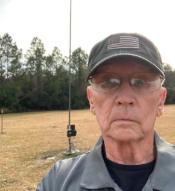
Don Rand, WV5Q, with his SteppIR Big IR IV vertical that he uses daily for collecting traffic from CAN and moving it to Louisiana, Alabama, and Mississippi voice nets. | | |
I have over 30 years of military service (retired in 2005), 51 years as an RN, and 45 years as a ham. I always joke that I can trace the electrical path of a heartbeat, know all of the major nerves and pathways in the body, but can never quite grasp all the resistance, capacitance, and inductance stuff. Today, I am a proud Extra, WV5Q, and my wife, Terri, is a General, KB5AGW. Husband for 58 years, father of 3 and grandfather of 3.
My amateur radio journey began like just about everyone else of my generation. A boyhood friend was given a Hammarlund radio in 1956. Throwing a wire out of his window brought the world into his tiny bedroom. Shortly after that, my father picked up a Phelps radio (about the size of a Wurlitzer jukebox) that was being trashed. We changed out a couple of tubes, and the world was in our living room.
|
|
Much later (1964), while working at WTTW television in Chicago, our audio engineer was a ham, and I was fascinated by the portable setup he had in his Sunbeam Tiger sports car.
The next 8 years were used up by college, Vietnam, college, and back into the Air Force.
After a tour at Scott AFB, Illinois, and flying as a Flight Nurse/Flight Instructor/Examiner (FIFE), I was sent to Alaska where I continued flying, ending up with over 3000 hours as a Flight Nurse.
While looking at the curriculum of the local community college in Anchorage, I saw a licensing course.
My wife and I enrolled and, 12 weeks later, we tested at the local FCC office.
I received KL7JS, and Terri got WL7AGW. Our instructor was Wilse Morgan, AL7P (SK), who was instrumental in the start of the Volunteer Examiner program.
He is the one who steered me into the traffic lane of amateur radio.
Starting with sending and receiving traffic by CW in Alaska, I became fascinated with RTTY and soon had a 24/7 setup with a KB-ASR-28 with tape cutter Teletype machine sending and receiving traffic from the “lower 48.” One Mother’s Day, the KL7CQ club set up in the largest mall in Anchorage, taking Mother’s Day traffic. I ended up sending out over 300 pieces of traffic via RTTY.
I broke it up into blocks of 10 to allow for fills but luckily, propagation was good and I don’t remember very many fills being needed.
This interest has continued until today.
The military tours included Eglin AFB, Florida; Scott AFB, Illinois; Elmendorf AFB, Alaska; Wurtsmith AFB, Michigan; Misawa AFB, Japan; Keesler AFB, Mississippi; Camp Shelby, Mississippi, ending at Walter Reed Hospital in Maryland, where I was responsible for over 800 personnel. I am currently the Section Traffic Manager for Mississippi, and the Digital Liaison for Mississippi, Alabama, and Louisiana.
In late 2022, I was invited to join the NTS 2.0 working group and volunteered to create an “embedded” ICS-213 form. It took a couple of months before I grasped the image of what an “embedded” ICS-213 should look like, but, with the image in my head, I began creating a PDF form using Adobe Acrobat. Dozens and dozens of tests and trials later, and with the help of the NTS 2.0 digital team, we not only created an “embedded” ICS-213 form capable of messages exceeding 150 words, but we had a Texas EMA S.T.A.R. request form, an HICS-213, an ARC-213, and a new ARRL PDF Radiogram form. All are fillable PDF forms and have data dictionary and instructions. They can be found at nts2.arrl.org.
My current setup includes a TS-480HX paired with an SCS P7400 for PACTOR traffic, a FLEX-6400M for voice liaison for the MS, AL, and LA traffic nets, and a FLEX-3000 for my Winlink Gateway station.
I don’t get on the radio much, but enjoy working the POTA activations, and the occasional special event stations.
73 — Don, WV5Q
|
|
The National Traffic System® (NTS®) is a network of amateur radio operators who move information during disasters and other emergencies.
General messages offering well wishes also move through the NTS® to help test the system and to help amateur radio operators build traffic handling skills.
While the NTS® is primarily set up to serve the United States and Canada, it is possible to move traffic internationally through the NTS® through various local, regional, area, and international network connections.
NTS 2.0
NTS Manual
NTS Methods and Practices Guidelines
Handling Instructions
Numbered Texts
Form Encoding Rules for Form
|
|
Sign Up to Receive The NTS Letter |
|
The NTS® Letter is published monthly and is free of charge to ARRL members. Subscribe: www.arrl.org/opt-in-out
If anyone has not received copies of The NTS Letter by email, be sure to check www.arrl.org/opt-in-out
to confirm that you are opted in. If you don't see The NTS Letter listed among the publications you are opted into, click on "Edit," and you will have the opportunity to check the box to receive The NTS Letter. If you have missed any issues, you can find them all at www.nts2.arrl.org/nts-letter-issues
as well as on the ARRL website.
Editor: Marcia Forde, KW1U, Section Traffic Manager -- Eastern Massachusetts, Western Massachusetts, and Rhode Island
ARRL Director of Emergency Management: Josh Johnston, KE5MHV
|
|
NTS® is a program of ARRL The National Association for Amateur Radio®. No other organization works harder than ARRL to promote and protect amateur radio! ARRL members enjoy many benefits and services including digital magazines, e-newsletters, online learning (learn.arrl.org), and technical support.
Membership also supports programs for radio clubs, on-air contests, Logbook of The World®, ARRL Field Day, and the all-volunteer ARRL Field Organization.
|
|
The
NTS Letter is published every month (12 times each year). ARRL members may subscribe at no cost or unsubscribe by editing their Member Data Page at
www.arrl.org/opt-in-out.
Copyright © 2025 American Radio Relay League, Incorporated. Use and distribution of this publication, or any portion thereof, is permitted for non-commercial or educational purposes, with attribution. All other purposes require written permission.
|
|